


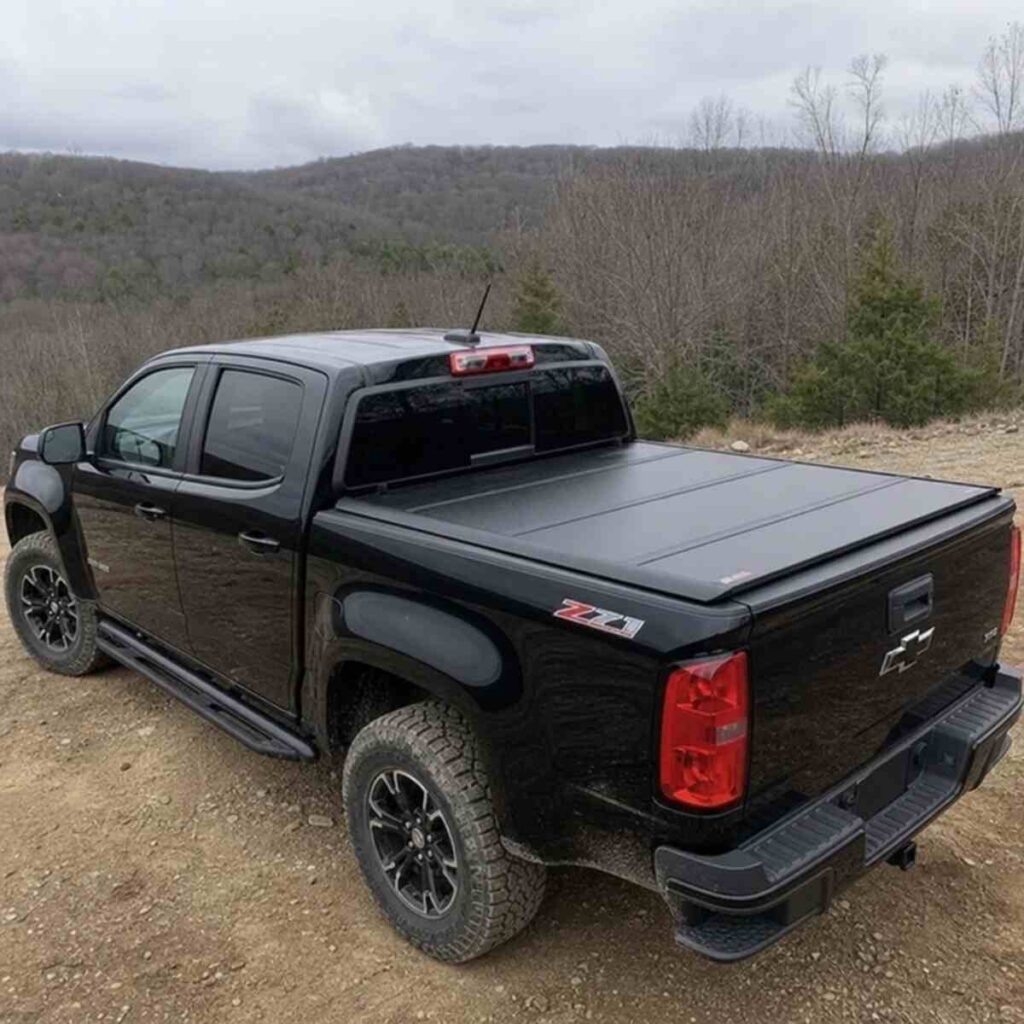
Whether you use your truck for hauling construction materials to a busy job site, towing a camper for weekend family getaways, or simply commuting to the office with secure cargo in the back, your truck bed is your most valuable asset. However, leaving that bed exposed to the elements and prying eyes is a risk most truck owners are unwilling to take. Enter the tonneau cover—the ultimate accessory for utility, security, and style. Select the best tonneau cover.
When you start shopping for the best tonneau covers on the market, you will quickly encounter two heavyweights dominating the industry: the traditional tri-fold and the modern flipback quad-fold. Both styles offer exceptional protection, but their designs cater to very different types of truck owners. The ultimate debate of the Tri-Fold vs Flipback Quad-Fold Tonneau Cover comes down to how you use your bed, what you haul, and how much access you need on a daily basis.
In this comprehensive guide, we will break down everything you need to know about these two popular styles. From a deep dive into an aluminum vs composite truck bed panels debate to examining the impact of tonneau covers on fuel economy, we are leaving no stone unturned. By the end of this extensive guide, you will know exactly which folding bed cover belongs on the back of your rig.
1. The Anatomy of Folding Tonneau Covers
Before we pit these two styles against each other in a rigorous tonneau cover comparison, it is crucial to understand the foundational mechanics of folding truck bed covers. Unlike roll-up covers (which use fabric or interconnected aluminum slats that roll toward the bulkhead) or one-piece painted fiberglass lids (which lift on hinges like a car trunk), folding covers consist of rigid or semi-rigid panels connected by heavy-duty hinges.
These panels fold on top of one another, moving from the tailgate toward the truck cab. The folding design has become the gold standard in the truck accessory world because it offers a perfect hybrid of heavy-duty security and flexible utility.
Why Choose a Folding Cover?
- Segmented Access: You do not have to open the entire cover to grab a single toolbox near the tailgate.
- Security: Hard folding covers offer vault-like security when paired with a locking tailgate.
- Versatility: You can drive with the cover fully closed, partially open, or fully open depending on your cargo.
- Aesthetics: Modern options sit flush with the bed rails, providing a clean, aerodynamic look.
2. Deep Dive: The Tri-Fold Tonneau Cover
The tri-fold tonneau cover is the undisputed classic of the folding cover market. As the name suggests, it is divided into three equal-sized panels. When you want to open it, you unlatch the panel nearest the tailgate and fold it back onto the middle panel. You can then fold both of those onto the third panel (the one closest to the truck cab) and secure them with built-in buckling straps.
The Two Faces of Tri-Folds: Soft vs. Hard
When comparing soft tri-fold vs hard folding covers, you will notice significant differences in price, weight, and security.
Soft Tri-Fold Covers:
- Material: Constructed from marine-grade vinyl stretched over an aluminum frame.
- Pros: Incredibly lightweight, budget-friendly, and simple to remove completely if you need your entire bed.
- Cons: Vulnerable to sharp objects (knives) and heavy weight. They flutter slightly at highway speeds.
Hard Tri-Fold Covers:
- Material: Constructed from solid aluminum panels, fiberglass-reinforced polymer (FRP), or a composite material.
- Pros: Exceptional security, high weight capacity, and a premium look.
- Cons: Heavier to fold, higher price point, and harder to remove entirely by yourself.
Advantages of a Tri-Fold Tonneau Cover
- Ease of Use: With only three panels, the folding process is remarkably fast. Dropping the tailgate, releasing the two rear clamps, and flipping the panels takes less than thirty seconds.
- Simple Removal: Traditional tri-folds sit on top of the bed rails and are often secured by hand-tightened clamps rather than bolted-on tracks. If you suddenly need to haul a massive refrigerator, you can unscrew the front clamps and lift the entire cover off the truck in minutes.
- Cost-Effective: Because the engineering is simpler and requires fewer hinges and struts than quad-folds, tri-folds generally come in at a lower price point.
The Major Drawback: Cargo Limitation
The biggest limitation of a standard tri-fold cover is bed access. Because the cover folds into thirds, the final panel remains fixed over the front 33% of your truck bed (near the cab). If you have a short bed truck (e.g., 5.5 feet), losing a third of your bed space means you cannot haul dirt bikes, ATVs, or large furniture unless you completely remove the cover and leave it in your garage.
3. Deep Dive: The Flipback Quad-Fold Tonneau Cover
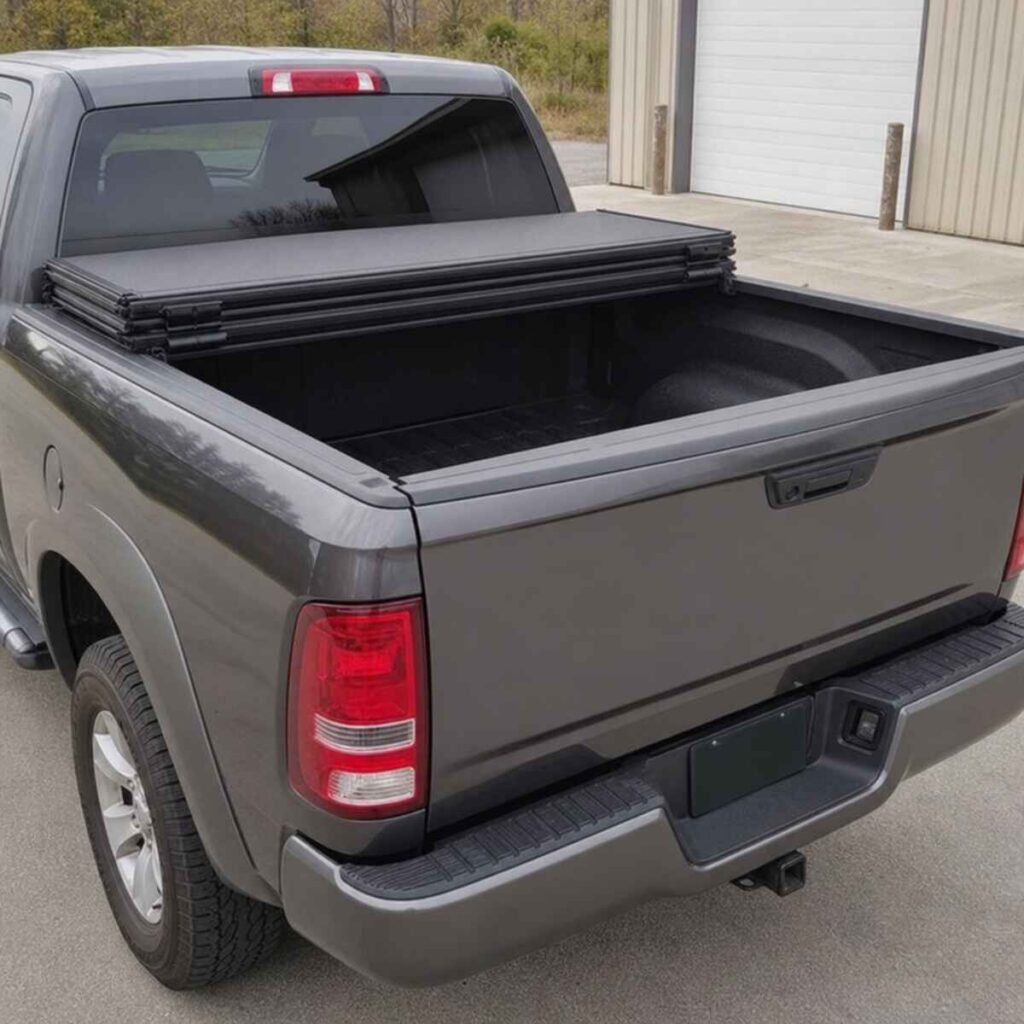
To solve the spatial limitations of the traditional tri-fold, engineers developed the quad-fold cover. Often referred to simply as “flipback” covers or hard-folding flush-mount covers, these feature four panels instead of three (though some variations on shorter beds technically use three panels plus a specialized hinge system to achieve the same result).
The defining characteristic of the flipback quad-fold is its ability to provide 100% bed access without requiring you to remove the cover from the truck.
How the Flipback Mechanism Works
Like a tri-fold, you unlatch the tailgate cover and fold the panels toward the cab. However, once you reach the final panel, a specialized dual-hinge and strut system comes into play. Instead of leaving the final panel horizontal over the bed, you lift the entire stacked assembly vertically. The cover leans slightly forward against the back of the truck cab (protected by rubber bumpers) or stands upright, supported by heavy-duty prop rods.
Advantages of a Flipback Quad-Fold Cover
- Full Bed Access Tonneau Covers: This is the primary selling point. You get the security of a hard cover when closed, but you can haul a dirt bike, a grandfather clock, or a load of topsoil at a moment’s notice because the bed is fully exposed.
- The Vertical Storage Position Truck Bed Cover: When the cover is propped upright, it serves as an additional headache rack, protecting your rear cab window from shifting cargo such as lumber or pipes.
- Sleek, Flush Profile: Most quad-fold covers mount inside the bed rails rather than sitting on top of them. This provides an ultra-low-profile look that matches the sleek bodylines of modern trucks.
The Drawbacks
- Rearview Visibility: The most significant downside to driving with a truck bed cover fully open in the vertical position is that it completely blocks your rear window. You will have to rely entirely on your side mirrors and backup camera.
- More Complex Hardware: Quad-folds rely on integrated drainage tubes, prop rods, and side mounting rails. This means more moving parts that require occasional maintenance.
- Price: The advanced engineering, additional hinges, and specialized struts make flipback quad-folds some of the most expensive covers on the market.
4. Head-to-Head: Tri-Fold vs Flipback Quad-Fold Tonneau Cover
Now that we have established how each cover functions, let us put them through a rigorous tonneau cover comparison across several critical lifestyle categories.
Category 1: Daily Utility and Convenience
If you only open your tonneau cover to throw in groceries, gym bags, or small toolboxes, the tri-fold is incredibly convenient. It is lighter to flip, and you rarely need the front third of the bed for daily errands. However, if you are a contractor, landscaper, or avid outdoorsman who frequently buys large, bulky items on a whim, the quad-fold flipback design is superior. You will never find yourself in a home improvement store parking lot trying to figure out how to unbolt your tri-fold cover to fit a new lawnmower.
- Winner: Quad-Fold for heavy utility; Tri-Fold for light daily driving.
Category 2: Highway Driving and Aerodynamics
One of the most frequently asked questions by truck owners is regarding the impact of tonneau covers on fuel economy. By enclosing the truck bed, you prevent the wind from getting trapped by the tailgate (the parachute effect). Both tri-folds and quad-folds drastically improve aerodynamics, potentially saving you 5% to 10% on highway fuel efficiency.
However, differences arise when looking at low profile folding bed cover reviews. Because quad-folds typically sit flush inside the bed rails, they offer marginally better wind deflection than traditional tri-folds that sit on top of the rails. Furthermore, if you are driving with a truck bed cover fully open, a vertically locked quad-fold acts like a spoiler, whereas a folded-flat tri-fold simply raises the bed floor slightly.
- Winner: Quad-Fold (Flipback) for its flush-mount aerodynamics.
Category 3: Bed Rail Use and Accessories
Many truck owners want to run accessories alongside their tonneau cover, such as ladder racks, bed rail tie-downs, or side-mounted toolboxes. If your cover sits on top of the bed rails (like most traditional tri-folds), you lose access to your stake pockets.
However, because most flipback quad-folds mount on the inner lip of the bed wall, they offer excellent access to stake pocket holes for truck accessories. This allows you to install a headache rack or crossbars for a rooftop tent while keeping the bed covered and secure.
- Winner: Quad-Fold (Flipback) covers designed for inner-rail mounting.
Category 4: Visibility and Safety
As mentioned earlier, flipping a quad-fold into its vertical storage position completely obscures your rearview mirror. If you are hauling a load across the country, relying solely on side mirrors can induce driver fatigue. A tri-fold, because it remains flat behind the cab, leaves your rear window entirely unobstructed.
- Winner: Tri-Fold.
5. Material Science: What Are These Covers Made Of?
Whether you choose a three-panel or four-panel design, the materials used to construct the panels will dictate the cover’s durability, weight, and weather resistance. The industry generally leans on two primary materials for hard folding covers: Aluminum and Composite/FRP (Fiberglass Reinforced Polymer).
Aluminum vs Composite Truck Bed Panels
Aluminum Panels: Aluminum is the traditional king of hard folding covers. Extruded aircraft-grade aluminum panels are incredibly tough and rigid.
- Strength: Highly resistant to brute force.
- Finish: Usually coated in a matte black powder coat, making them resistant to UV fading and scratches.
- Drawbacks: Aluminum can dent if struck by heavy, sharp objects (like a dropped hammer or severe hail). Additionally, aluminum panels get exceptionally hot to the touch under the blazing summer sun.
Composite / FRP Panels: Fiberglass Reinforced Polymer panels feature a tough, synthetic top layer over a rigid core (often aluminum or high-density foam).
- Strength: The major advantage of FRP is its impact resistance. Unlike aluminum, which dents, composite panels will bounce back from hail, dropped tools, and stray golf balls without showing a mark.
- Temperature: Composite materials disperse heat much better than metal, meaning they will not burn your hands on a 100-degree day.
- Drawbacks: Some lower-grade composites can fade or oxidize over time if not treated with UV protectants.
Maximum Weight Capacity of Folding Covers
A major consideration for overlanders, campers, and tradesmen is whether you can put weight on top of the cover. Can you stack lumber on it? Can it survive a massive winter storm?
If you live in northern climates, finding the best folding bed covers for heavy snow loads is critical. A standard soft cover will stretch, bow, and eventually collapse under two feet of heavy, wet snow.
Hard folding covers, whether tri-fold or quad-fold, are engineered with internal support bracing. When looking at the maximum weight capacity of folding covers, premium aluminum and composite models can typically support between 300 lbs and 400 lbs of evenly distributed weight.
Pro Tip: “Evenly distributed” is the key phrase. You can safely let a foot of snow accumulate on the cover, or gently lay sheets of plywood across the top. However, you cannot stand directly in the middle of a panel, as concentrating 200 lbs in a 5-inch area can puncture or dent the panel.
6. Weatherproofing and Security: Protecting Your Gear
The primary reason most people buy a tonneau cover is peace of mind. You want to know that your golf clubs, power tools, or camping gear will stay dry during a torrential downpour and remain in the bed when you park in a dimly lit hotel parking lot.
Creating a Weatherproof Seal for Folding Covers
No folding tonneau cover is 100% waterproof. Trucks are not built like submarines; there are gaps in the tailgate, stake pockets, and bed corners where water can intrude. However, high-quality tri-folds and quad-folds are highly weather-resistant.
- EPDM Rubber Seals: Both cover types utilize EPDM (Ethylene Propylene Diene Monomer) rubber seals along the perimeters and between the hinges. EPDM is highly resistant to UV rays, extreme cold, and heat, ensuring it won’t crack or shrink over time.
- Drainage Tubes (Quad-Folds): Because flipback quad-folds sit flush inside the bed rails, water naturally pools in the side tracks. To combat this, flush-mount covers utilize drainage tubes. These flexible hoses connect to the front of the mounting rails and route water out through factory drain plugs in the truck bed.
- Over-the-Rail Sealing (Tri-Folds): Because standard tri-folds sit on top of the bed rails, they naturally shed water over the sides of the truck, much like shingles on a roof. They generally do not require drainage tubes.
The Locking Mechanism for Multi-Panel Truck Covers
Security is where hard folding covers earn their price tag. The locking mechanism for multi-panel truck covers is ingeniously designed to integrate with your truck’s factory tailgate.
Most modern hard folding covers utilize rotary latches or slam latches located underneath the panels. These latches grip the side rails tightly. Because the latches are accessible only from beneath the cover, they cannot be reached when the cover is closed.
To secure the bed, simply close the cover, then close and lock your truck’s tailgate. If the tailgate is locked, the cover cannot be lifted. This turns your truck bed into a steel-reinforced vault.
Tailgate Operation with Folding Bed Covers
An often-overlooked feature when shopping is how the cover interacts with your tailgate.
- Dual-Action Seals: Premium covers (mostly modern quad-folds and high-end tri-folds) feature a universal dual-action tailgate seal. This allows you to close the tailgate while the cover is closed, or close the cover while the tailgate is closed.
- Overlap Seals: Older or budget-friendly covers feature a simple overlap flap. With these, you must close the tailgate first, and then firmly press the final tonneau cover panel down on top of it. If you try to close the tailgate while the cover is already down, you will smash the weather stripping and potentially damage the rear panel. Always check the tailgate operation specs before buying!
7. Towing and Hauling: Fifth Wheels and Goosenecks
Trucks are made to tow. If your towing lifestyle involves bumper-pull trailers (like travel trailers or standard boat trailers), your tonneau cover choice won’t affect your towing experience at all. However, if you pull a fifth-wheel camper or a gooseneck horse trailer, tonneau cover compatibility with fifth wheel towing becomes one of your most critical purchasing factors.
The Fifth Wheel Clearance Problem
Fifth wheel and gooseneck hitches mount directly into the center of the truck bed, directly over the rear axle. When maneuvering these heavy trailers, the neck of the trailer pivots sharply. It requires ample clearance between the trailer overhang and the truck bed rails.
Using a Tri-Fold Cover for Towing: If you have an 8-foot long bed, a folded tri-fold cover (which takes up roughly 32 inches near the cab) might leave just enough room to access your fifth wheel hitch. However, on standard 6.5-foot beds, the remaining folded panel will severely obstruct the hitching process and likely collide with the trailer’s pin box during tight turns. To safely tow a fifth wheel with a short-bed truck, a standard tri-fold cover must be completely removed from the truck.
Using a Flipback Quad-Fold for Towing: This is where the quad-fold shines brilliantly. By releasing the prop rods and folding the cover fully into the vertical storage position, the entire bed is exposed. The hitch is completely accessible, and there is zero risk of the trailer pin box colliding with horizontal cover panels during a 90-degree backing maneuver.
Many RV haulers prefer flipback covers for this exact reason: they offer secure, dry storage for hitches and gear when unhooked, and instantly convert to full-clearance towing mode without needing to remove heavy panels and leave them at the campsite.
8. Installation Guide: Setting Up Your Cover
Whether you are performing a hard folding truck bed cover installation or setting up a simple soft tri-fold, the process is generally something you can do in your driveway with basic hand tools. Let’s look at what tonneau cover installation entails for both styles.
Installing a Traditional Tri-Fold (Top-Mount)
This is the easiest installation in the world of truck accessories. It usually requires zero tools and takes about 10 minutes.
- Clean the Bulkhead: Wipe down the front bulkhead (the rail behind the cab) and apply the included weather stripping if your truck requires it.
- Position the Cover: Lift the folded cover assembly onto the bed rails and push it squarely up against the cab.
- Align and Square: Unfold the cover completely to the tailgate to ensure it is sitting perfectly square on the bed rails.
- Clamp the Front: Fold it back up. Crawl under the cover and hand-tighten the two front clamps underneath the bed rail lip.
- Secure the Rear: Unfold the cover again, pull down the rear quick-release clamps, and lock them into place. You are done!
Installing a Flipback Quad-Fold (Flush-Mount)
Because these provide full bed access and sit flush, the installation is slightly more involved, typically taking 45 minutes to an hour.
- Install the Side Rails: Unlike top-mount tri-folds, flush-mount covers come with two heavy-duty aluminum side tracks. You must temporarily clamp these to the inside lip of your truck bed rails, ensuring they are perfectly level.
- Attach the Rail Clamps: Using a half-inch wrench or socket, tighten the 3 to 4 aluminum clamps provided for each side rail. Tighten them in sequence (middle, front, rear) to keep the track straight.
- Place the Cover Assembly: Lift the heavy folded cover assembly and place it at the front of the truck bed, resting it on the newly installed side rails.
- Install the Elevator Bolts: Insert the provided elevator bolts through the front panel of the cover, passing them through the mounting slots on the side rails. Secure them underneath with rubber washers, metal washers, and star knobs.
- Route the Drainage Tubes: Locate the factory drain holes in the front of your truck bed (near the floor). Push the provided clear rubber drainage tubes through these holes, and attach the top ends to the collection spouts on the side rails.
- Test the Prop Rods: Fold the cover into the vertical position and test the prop rods to ensure they snap securely into their ball studs, holding the cover safely away from the cab window.
- Final Adjustments: Unfold the cover to the tailgate. If it is too far forward or backwards, loosen the front elevator bolts, shift the cover a quarter inch, and re-tighten.
9. Care, Maintenance, and Longevity
Investing in the best tonneau covers requires a commitment to maintaining them. A well-maintained hard folding cover can easily outlast the truck it is installed on. Here are the actionable maintenance tips you need to know.
Caring for the EPDM Seals
The weather stripping takes a beating from the sun, rain, and road salt.
- Do not use silicone sprays on the EPDM rubber seals, as silicone can degrade the material over time.
- Instead, use a dedicated water-based rubber protectant or tonneau cover conditioner. Wipe down the seals every three months to keep them plump, black, and supple. This ensures your weatherproof seal for folding covers remains intact.
Maintaining the Hinges and Latches
The interlocking hinges of aluminum vs composite truck bed panels can accumulate fine dirt and sand, which acts like sandpaper when you fold the cover.
- Once a season, blow out the hinges with compressed air.
- Apply a dry PTFE (Teflon) spray lubricant to the hinges and latching mechanisms. Avoid greasy lubricants like WD-40, as grease attracts and holds dirt, which will eventually bind up the latches.
Panel Cleaning
- Soft Covers: Use a dedicated vinyl cleaner and a soft-bristle brush. Avoid harsh dish soaps that strip the vinyl of its natural oils, causing it to crack.
- Hard Covers (Aluminium/FRP): Wash them exactly as you would your truck’s paint. Use automotive car wash soap and a microfiber mitt. For composite panels, an occasional coat of aerospace protectant spray will keep the deep black finish from turning chalky gray under intense UV exposure.
10. How to Choose: Which Cover is Best for You?
We have explored the engineering, aerodynamics, installation, and materials. But the tonneau cover comparison ultimately boils down to your lifestyle. Let’s break down actionable buying advice based on different types of truck owners.
The Budget-Conscious Commuter
If you use your truck primarily as a daily driver to commute to the office, and your bed cargo consists of groceries, gym equipment, or suitcases for weekend trips, you do not need to overspend.
- Recommendation: A Soft Tri-Fold Cover. It is highly affordable, keeps your cargo out of sight, significantly improves the fuel economy impact of tonneau covers, and installs in minutes.
The General Tradesman / Weekend DIYer
If you carry expensive power tools during the week but occasionally need to haul drywall, 2x4s, or appliances on the weekend, security is your top priority. You need something tough, but you might not want to block your rear window.
- Recommendation: A Hard Tri-Fold Cover. It provides impenetrable security, handles moderate weight on top, and can be completely removed in about 5 minutes with a buddy if you need the full bed for a massive load of lumber.
The Ultimate Overlander / Camper
You are hitting the trails, running a rooftop tent, carrying recovery gear, and maxing out your truck’s utility. You need stake pocket-hole accessibility for truck accessories to mount bed racks, and a cover that won’t dent from hail or falling branches.
- Recommendation: A Composite Flush-Mount Quad-Fold. The FRP panels will resist impact damage, the flush mount leaves your stake pockets free for overlanding racks, and it offers maximum weather resistance.
The RV Hauler / Powersports Enthusiast
If you are pulling a fifth wheel, hauling ATVs, or transporting dirt bikes, bed clearance is non-negotiable. You cannot afford to lose the front 33% of your truck bed.
- Recommendation: An Aluminum Flipback Quad-Fold Cover. The vertical storage position truck bed cover feature allows you to load an ATV right up to the bulkhead, or maneuver a fifth-wheel hitch without the trailer colliding with the tonneau cover. It is the absolute pinnacle of full-bed access.
11. Frequently Asked Questions (FAQ)
To ensure this guide is as comprehensive as possible, let’s address some of the most common questions buyers have when comparing the Tri-Fold vs Flipback Quad-Fold Tonneau Cover.
Is driving with a truck bed cover fully open safe at highway speeds?
Yes, provided it is properly secured. Tri-folds feature heavy-duty buckles that strap the folded panels tightly together, preventing wind lift. Flipback quad-folds use rigid metal prop rods that lock the cover into the vertical position. Always double-check your struts or buckles before hitting the highway!
Can a tonneau cover go through an automatic car wash?
Hard folding covers (both tri-fold and quad-fold) can easily withstand touchless and soft-cloth automatic car washes. However, soft vinyl tri-folds should avoid automatic washes with heavy spinning brushes, as the aggressive bristles can scratch or tear the vinyl over time. Furthermore, the high-pressure blowers at the end of the wash might push a small amount of water past the EPDM seals, so don’t leave water-sensitive electronics in the bed during a wash.
Do these covers rattle when driving over bumps?
High-quality hard covers are designed with thick rubber bumpers that sit between the panels when folded. When fully closed and latched, the locking mechanism for multi-panel truck covers pulls the cover down tightly against the bed rails, eliminating metal-on-metal contact. If you hear rattling, your front clamps or side rails likely need tightening.
Can I install a tonneau cover if I have a drop-in plastic bed liner?
Yes, but it may require modification. Over-the-rail tri-folds usually clamp right over the plastic lip without issue. Flush-mount quad-folds require the side clamps to grip the bare metal of the inner bed rail. If your plastic drop-in liner covers the inner lip, you will need to use a Dremel or utility knife to notch out small square sections of the plastic liner where the clamps need to attach. (Note: Spray-in bed liners do not require any modifications and are perfectly compatible with all covers).
Conclusion: Making the Right Investment for Your Truck
Your truck is an extension of your lifestyle, and equipping it with the right gear is essential to maximizing its potential. The debate between the Tri-Fold vs Flipback Quad-Fold Tonneau Cover does not end with one being inherently “better” than the other—it ends with finding the precise match for how you work, play, and drive.
If you value simplicity, unobstructed rear visibility, and a lower price point, the traditional hard or soft tri-fold cover remains a spectacular choice. It is a tried-and-true design that has protected millions of truck beds worldwide.
Conversely, if you demand absolute versatility, regularly tow heavy gooseneck trailers, or simply cannot live without 100% full-bed access, tonneau covers, the modern flipback quad-fold is a premium investment that will transform how you use your vehicle.
Take the time to evaluate your typical cargo, consider your need for access to the stake pocket hole, and decide whether a low-profile flush mount or a traditional top-mount look suits your truck’s aesthetic. By weighing these factors, you will ensure your truck bed is secure, your gear is protected from the harshest weather, and your rig is ready for whatever the road ahead has in store.